What is the Imperative Role of a Fire Hydrant System in Emergency Situations?
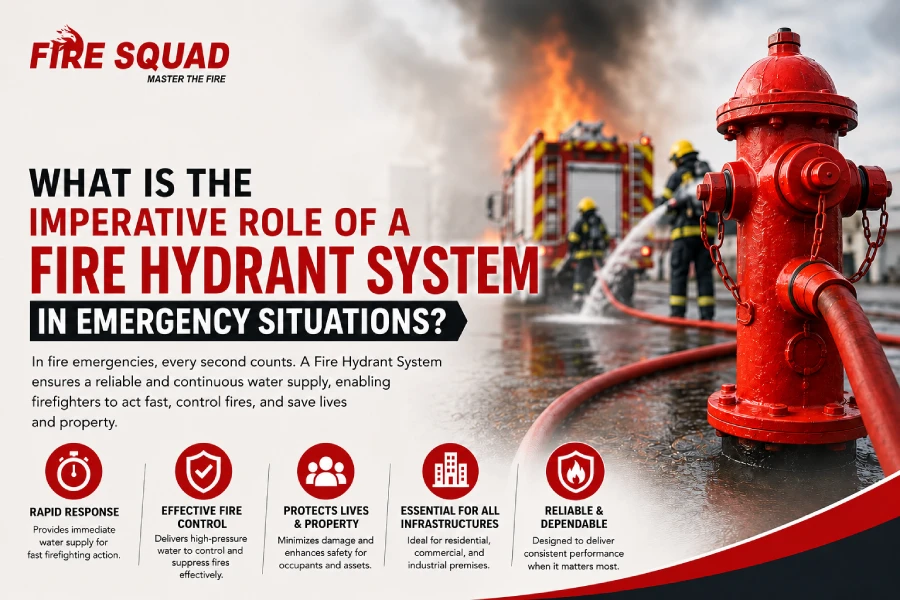
When it comes to fire emergencies, fires can quickly escalate in a few minutes; thus, prompt action is necessary to save lives and minimize damage. Moreover, the fire hydrant system is one of the most effective firefighting equipment, in addition to a fire extinguisher, which ensures the availability of water to put out the fire and prevent it from spreading fast. Fire prevention demonstrates a crucial safety issue for properties, such as residential, industrial, and commercial premises, due to the fact that fire is likely to cause considerable losses both to human beings and property.
As it is widely known, a fire hydrant system is one of the most crucial fire protection systems. When it comes to the infrastructure of various industries, it is vital to ensure effective fire safety measures, among which are fire hydrant systems. Moreover, in this blog post, we will consider the role of fire hydrant systems in emergencies, which everyone needs to be aware of.
What is a Fire Hydrant System?
A fire hydrant system is an active fire protection system that uses water to provide an immediate supply of pressurized water in situations where there are uncontrolled fire emergencies. It consists of a dependable water supply from a fire extinguishing machine, including water tanks or mains, connected pipelines, fire pumps, and outlets located in strategic areas, according to a professional publication. In case of a fire outbreak, firefighters connect the hoses to the valves and use high-pressure water to control fires immediately.
Key features of a Fire Hydrant System:
- The system needs a constant supply of water, which may come from a dedicated underground or overhead water tank or a city source.
- Fire electric or diesel fire pumps, including jockey pumps, ensure that water pressure and flow remain constant throughout the system so that the water can be properly sprayed on the fire.
- The water is supplied to all outlets and hydrant valves through a distribution grid of high-capacity piping, normally installed around the building in the form of a ring.
- Hydrant valves are the crucial connecting points where firefighters connect the hoses. These valves are installed in accessible locations outside or within cabinets on the building floors.
- High-quality fire hoses are connected to the hydrant valves; branch nozzles regulate the water pressure, spray patterns, and direction.
Technical Configuration of a Fire Hydrant System
| Component | Technical Configuration |
|---|---|
| System Type | Wet Riser / Dry Riser / Yard Hydrant System |
| Water Source | Underground tank, overhead tank, or municipal water supply |
| Fire Pump | Electric pump, diesel pump, and jockey pump |
| Pump Capacity | Typically 900–2,850 LPM (as per design requirements) |
| Pump Pressure | 7–10 bar (typical operating range) |
| Hydrant Valve Size | 63 mm (2½ inch) landing valve or pillar hydrant |
| Hose Size | 63 mm diameter, 15–30 m length |
| Hose Reel | 19 mm diameter, 30 m length (where provided) |
| Branch Pipe & Nozzle | 20 mm nozzle with branch pipe |
| Riser/Main Pipe Material | Mild Steel (MS), GI, or DI pipes |
| Main Pipe Diameter | 100–150 mm (typical) |
| Hydrant Spacing | Approximately 30–45 m between hydrants |
| Operating Pressure at Hydrant | Minimum 3.5 bar residual pressure |
| System Standard | Designed in accordance with NFPA 14, IS 3844, or local fire authority requirements |
| Control Valves | Butterfly/Gate valves with tamper switches (where applicable) |
| Testing Requirement | Hydrostatic pressure test and periodic flow testing |
| Purpose | Manual firefighting by trained personnel before or during fire brigade intervention |
Vital Roles of a Fire Hydrant System in Emergency Situations
Here are the imperative roles of a fire hydrant system that will prevent fire emergencies that every individual should know:
1. Immediate Water Supply for Rapid Response
Every minute counts in case of fire outbreaks. The speed of the emergency team’s reaction can play a crucial role in saving human lives and minimizing damage to property. In such a case, fire hydrants become extremely useful as they provide continuous water flow from the moment of reaching the site. In contrast to tankers with limited water quantity and inability to deliver water, the connection to the hydrant system allows firefighters to start dealing with the fire right away. It increases the efficiency of firefighting activities and prevents minor blazes from becoming serious threats. The presence of a fire hydrant system in commercial or residential buildings gives better chances for people and objects to stay safe in the event of a fire outbreak.
2. High-Pressure Delivery for Large-Scale Blazes
Not all fires can be dealt with the help of portable extinguishers or sprinkler systems. In factories, warehouses, shopping malls, and other large-scale commercial facilities, the burning process can be fast and require a large volume of water in order to extinguish it. Hydrant systems are specifically designed to cope with such types of fires. By using high-pressure pumps and a network of pipelines, fire teams get the opportunity to deliver powerful water flows to places filled with smoke and deep into the fire zone. Having such a supply of high-pressure water, they will be able to control the fire better and minimize risks of its spread.
3. Protection of Adjacent Buildings and Containment
Fires do not always occur inside one building. If it spreads to adjacent objects, the damage increases very quickly, especially in residential districts, industrial zones, and commercial complexes. A fire hydrant system helps to prevent it. Due to a continuous water supply, firefighters are able to form a shield around adjacent buildings and to cool down walls, roofs, and other exposed surfaces before the fire reaches them. It not only protects additional property but helps to get the situation under control. Thus, it minimizes property damage, protects surrounding businesses and homes and makes firefighting operations more efficient.
4. Continuous Water Source Independent of Power Grids
Large fires often lead to power outages due to the damaging of electrical networks or the intentional turn-off of the electricity supply for security reasons. During this time, firefighters still have to get a water supply for further actions. Most modern fire hydrant systems are equipped with backup supplies that consist of diesel engine-driven fire pumps that continue to supply water regardless of power failures and guarantee stability of pressure during the emergency.
5. Seamlessness of Cooperation with Fire Brigades
The fire hydrant system is designed to work in perfect combination with professional firefighting teams. They are equipped with standard hose connections, landing valves, and fire brigade inlets that give firefighters the ability to connect their equipment quickly and conveniently. In multistorey buildings, fire brigade inlets allow fire trucks to add additional water flow into the building’s firefighting system, increasing water pressure where it is necessary. Hence, it becomes easier to deliver water to the upper levels and control fire.
6. Life Safety and Evacuation Assistance
The most important thing during any fire emergency is to save human lives. Hydrant systems help a lot to make buildings safer during this period of time. Due to a quick and continuous water supply, the size and intensity of the fire become smaller. It reduces the risks of any structural damage, minimizes smoke distribution and creates safer conditions for leaving the building. At the same time, firefighters get the opportunity to save time on rescue operations and to evacuate people trapped inside the building.
It’s Time to Wrap Things Up!
A reliable fire hydrant system is one of the key elements of fire protection. Providing instantaneous and continuous water supply, supporting firefighters, protecting surrounding buildings, creating safer conditions for evacuation and satisfying legal safety requirements, hydrant systems are very useful during fire emergencies.
Spectra Fire understands that every building has its own fire safety requirements. That is why Spectra Fire provides quality fire hydrant systems that are designed to provide reliable performance, regulatory compliance and long-lasting service. Whether you need an expert system design, installation, testing or maintenance services, we offer complete fire protection solutions to help you safeguard your people, property and business.
Frequently Asked Questions
The working of a fire hydrant system involves the following steps:
- The water is supplied from the underground tank, overhead tank, or from the municipal source.
- Fire pumps supply the required pressure to water across the system.
- Firefighters link the hose with the hydrant valves or landing valves.
- The pressurized water is discharged using branch nozzles for fighting the fire.
- The system continues to deliver water till the situation is brought under control.
A fire hydrant system is mainly used to fight fires using manual intervention involving firefighters and fire brigades. Whereas the fire sprinkler system automatically triggers as soon as the heat of the fire reaches a certain degree and suppresses the fire till the arrival of fire emergency teams. Both systems are installed in many commercial places for fire protection.
Fire hydrant systems are installed in factories, warehouses, shopping complexes, hospitals, hotels, educational institutions, residential complexes, airports, high-rise commercial buildings, etc. It depends on the fire safety requirements of the place.
Inspection and maintenance are required regularly to ensure efficient functioning during emergencies. Periodic visual inspections, checking the condition of pumps, pressure tests, valve operation tests, hose inspections and periodic flow tests are needed for maintenance of the system.