
Fire Sprinkler Systems

How do Fire Sprinkler Systems Work During Sudden Emergencies?

How do Fire Sprinkler Systems Work During Sudden Emergencies?

Any fire accidents may occur unexpectedly, and every second counts when trying to take care of the issue. That is why fire sprinkler systems are considered the most reliable fire safety solutions in residential, office, commercial, factory, and warehouse environments. They respond to fire, heat, and can stop and control fires immediately. As we all know, the quicker the reaction, the greater the likelihood of less damage and loss of life. That is why fire sprinklers are the most effective tools in extinguishing fires, especially in large buildings. However, the primary question is how the fire sprinkler works in fire emergencies without escalating the fire.

Furthermore, in this comprehensive blog post, we will discuss how fire sprinkler systems work during sudden emergencies. Read till the end to know more precise details.

What are Fire Sprinkler Systems?

Fire sprinkler systems are made up of either water-filled or pressurized pipelines that are placed within walls or ceilings in order to prevent any spread of the fire at an early stage. Smoke is not the trigger for a fire sprinkler. Nevertheless, the heat produced by the fire bursts the glass containing fluid or bends the metallic link inside the sprinkler head. As a result, water that has been pressurized is released directly onto the fire flames, while other regions remain dry. Hence, two types of systems are a dry system in case of freezing and a wet system in the case of hot buildings.

Working functionality of Fire Sprinkler Systems

One of the main benefits of automatic fire sprinkler systems is that they function according to a simple mechanical mechanism and not purely on electricity or manually. Thus, they react quickly, minimize the property losses, and, first and foremost, save lives. Let us have a look at how these systems work.

1. Heat-Based Activation Avoids False Alarms

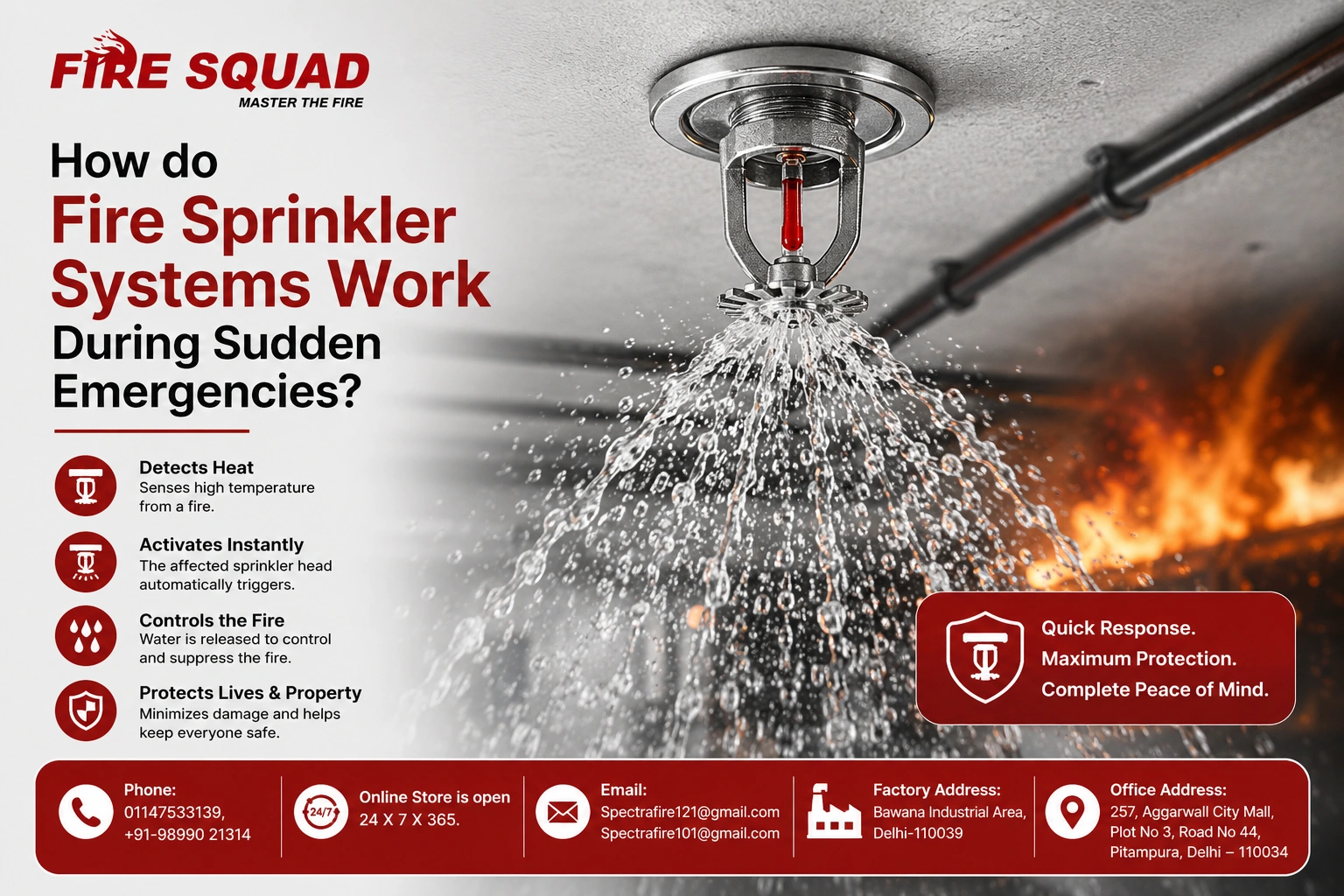
There is a widespread misconception about fire sprinklers being the same as smoke detectors, which is incorrect. Sprinklers do not react to any smoke, steam, or cooking fumes, but they only react to heat. Every sprinkler head contains a small glass bulb filled with some liquid. When it warms up due to the heat around the sprinkler head, it expands and bursts when the temperature goes beyond 57°C to 74°C, allowing water to come out of the sprinkler. Due to this specific mechanism, fire sprinklers are highly reliable and not prone to accidental activation caused by normal everyday actions like cooking or dust.

2. Independent Reaction Prevents Water Damage

Another widespread myth about fire sprinklers comes from various movies, where all sprinklers start working simultaneously in case of a fire. But this idea is quite misleading. Every single sprinkler operates individually. Only the sprinkler or a fire extinguisher that is nearest to the place of fire activation becomes operational, as it is the one being exposed to heat. All the other sprinklers remain closed until they sense enough heat. This targeted approach allows fighting the fire while preventing unnecessary water damage in the rest of the building.

3. Immediate Fire Suppression Due to Pressurized Wet Pipes

Wet pipe systems are the most commonly used fire sprinkler systems in the world. In this configuration, the pipes are constantly filled with pressurized water, which ensures readiness to operate at any time needed. When the glass bulb in the sprinkler head bursts, water is released immediately and goes through the pipe into the sprinkler head. Then it hits the deflector plate and is dispersed evenly in the affected area. The absence of a waiting period for water to reach the sprinkler allows for controlling the fire immediately, preventing its spread through the building.

4. Controlled Water Dispersal Saves Building Resources

Many people believe that fire sprinkler systems will create significant water damage. But in fact, these systems require much less water than regular fire hoses, which firefighters use in their work. Water is sprayed in a specially designed pattern to efficiently cool the fire and its surrounding area. As fire is controlled in its early stage, there is no necessity to use huge amounts of water to extinguish it. Therefore, fire sprinklers can spray even a very small portion of water that is required to extinguish a fire compared to hoses.

5. Smoke Reduction Makes Air Cleaner

Smoke is usually more dangerous in a fire than flames. It makes it difficult to see anything, breathe, and contain gases, which puts human lives in danger. Also, fire sprinklers or a fire extinguisher help in this situation. By suppressing the fire, sprinklers reduce the temperature, which slows down the fire-burning process significantly. This way, less smoke and toxic gases are produced, creating a safer environment for the evacuation of people while also increasing the visibility of the building for firefighters.

6. Immunity to Power Outage Ensures Continuous Functionality

Power failure is quite common during big fires, but it does not prevent the majority of fire sprinklers from working normally. Unlike traditional fire alarms that operate based on electrical mechanisms, fire sprinklers rely solely on heat and water pressure. In case of a power outage, sprinklers continue their independent activation when exposed to enough heat. Therefore, this mechanical reliability ensures the protection of people and property under any circumstances.

7. Automatic Emergency Alerts Accelerate Firefighting Process

Modern fire sprinkler systems usually operate along with fire alarm systems in order to accelerate the process of emergency reaction. When the water starts flowing through the sprinkler pipes, the water flow switch detects it and immediately turns on the fire alarm system in the building. In many cases, this signal is also sent directly to the firefighters in charge. Hence, building occupants have a chance to evacuate in a safe way while firefighters get notified in time and arrive at the place as soon as possible.

It’s Time to Wrap Things Up!

Fire sprinkler systems are a much bigger and more significant thing than a simple firefighting device. Its immediate response, quick-fire control, smoke reduction, and continuous operation in case of power failure make it one of the most efficient fire protection systems ever invented.

For those who are searching for reliable fire safety solutions, Spectra Fire is your trustworthy supplier. From high-quality fire sprinkler systems to fire protection solutions as a whole, we offer products that meet industry standards and are built to last. With our expertise, professional installation, and commitment to your safety, we help you secure your people, property, and business. Connect with our team to get more precise details about fire extinguishing products.

Frequently Asked Questions

The majority of fire sprinkler heads are activated in cases when the temperature rises to 57°C and 74°C. Heat melts the glass bulb or fusible link, and water is released to extinguish the fire.

No, each sprinkler head operates individually, and the only sprinkler activated is the one being exposed to the appropriate temperature.

Here are some vital reasons to install a fire sprinkler:

  • Extinguish fires at the very beginning of their existence.
  • Prevent additional property losses and minimize the downtime of your business.
  • Ensure higher safety of people as sprinklers help slow down the fire spread.

Yes, since sprinkler systems use heat-responsive sprinkler heads and pressurized water, their operation does not require any electricity.

Here are some keen difference between wet and dry pipe sprinkler systems:

  • Wet pipe systems have pipes full of water.
  • A dry pipe system includes pressurized air in pipes and can be used in a freezing environment.
  • Usage: It depends on the specifics of the building and its location.

Read more...
What is the Fundamental Role of Fire Sprinkler Systems in Fire Safety?

What is the Fundamental Role of Fire Sprinkler Systems in Fire Safety?

Fire incidents can happen without giving prior warning, causing extensive property damage and posing a serious threat to human life. In such serious situations, early response becomes the biggest lifesaver. While fire alarms alert occupants and fire extinguishers offer manual protection, fire sprinkler systems stand out as the true silent saver. Furthermore, they operate automatically and activate immediately, controlling fire before it grows into a huge disaster. Sprinkler systems are one of the most significant cornerstones of modern fire safety strategies, designed to automatically detect and suppress fires before they can turn into an uncontrollable fire situation and cause severe damage. Moreover, despite the proven effectiveness of sprinkler systems, the importance of maintaining and comprehending them is often underestimated.

Moreover, fire sprinkler systems play an imperative role in contemporary fire protection strategies, significantly reducing fire risks in commercial, industrial, and residential buildings. By noticing and preventing fires early, sprinkler systems help prevent catastrophic damage and, most significantly, save lives. Nevertheless, in this comprehensive guide, we will discuss the end-to-end role of fire sprinklers in fire safety that you must know before any difficult situation occurs.

What is a Fire Sprinkler System?

Fire incidents can spread within minutes, causing extensive property damage and risking lives. This is where fire sprinkler systems are significant in containing and preventing fires before they escalate. They are designed to respond immediately, which ensures a quick and effective firefighting mechanism that reduces risks and improves safety.

A fire sprinkler system depends on a network of specialized pipes designed to deliver water quickly and properly during emergencies. It is vital to select high-quality fire pipes because they must withstand very high temperatures, high pressure, and constant contact with water. It is important to understand what a fire sprinkler system is to ensure the correct pipes are selected.

Technical Configuration of Fire Sprinkler Systems

Component Technical Configuration Function
Water Supply Dedicated tank, municipal supply, or reservoir Provides water for fire suppression
Fire Pump Electric, diesel, or jockey pump Maintains required pressure and flow
Main Control Valve OS&Y gate valve, butterfly valve, or post indicator valve Controls water supply to the system
Alarm Check Valve Wet-pipe or dry-pipe configuration Prevents reverse flow and activates alarms
Piping Network Steel, CPVC, copper, or approved materials Distributes water to sprinklers
Sprinkler Heads Pendant, upright, sidewall, concealed Discharges water onto the fire area
Sprinkler Temperature Rating Ordinary, Intermediate, High, Extra High Activates when heat reaches set point
Operating Pressure System design pressure Ensures effective sprinkler discharge
Flow Switch Paddle-type or vane-type switch Sends fire alarm signal
Pressure Switch Supervisory or alarm type Monitors system pressure
Fire Alarm Interface Connected to Fire Alarm Control Panel (FACP) Provides monitoring and alarm notification
Hazard Classification Light, Ordinary, Extra Hazard Determines design density and water demand
Design Density Water application rate Required discharge over design area
Design Area Hydraulic calculation area Area assumed to be operating during fire
Standby Power Generator or battery backup Maintains monitoring and alarm functions
Monitoring System BMS, SCADA, or fire alarm network Supervises system health
Testing & Drain Assembly Inspector's test valve and main drain Enables testing and maintenance
Compliance Standards NFPA 13, EN 12845, LPCB, FM Global Governs system design and installation

Role of Fire Sprinkler Systems in Fire Safety Situations

Here are some significant roles of fire sprinkler systems in fire safety solutions that every individual should know:

1. Early Detection and Extinguishing of Fire

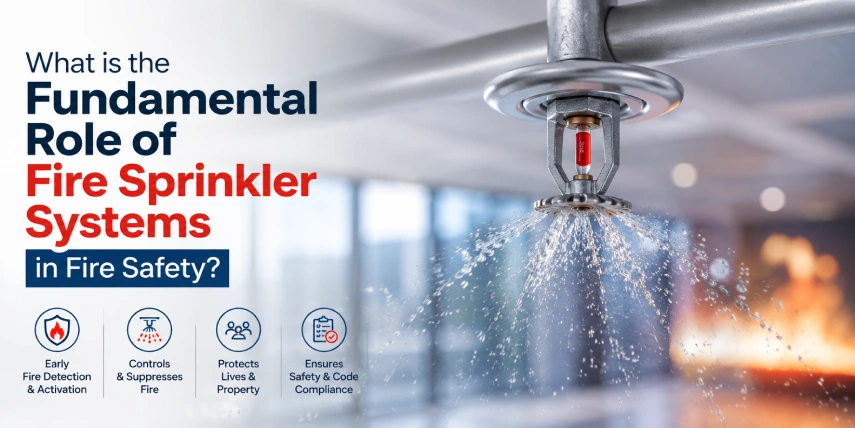
In case a fire emerges, every single second counts. It is vital that the system detects the fire promptly. Fire sprinkler systems respond to the high temperature created by a fire. Thus, once the temperature is high enough, the sprinkler head close to the fire opens and starts spraying water over the flames. It will help extinguish the fire quickly enough to prevent its further spread. In most cases, the use of sprinklers prevents the fire from spreading to other parts of the house/building. Likewise, the sprinkler system can help people prevent any kind of fire damage before firefighters come to assist.

2. Minimizing Fire Damage

It is possible to minimize the damage caused by fire if there is a fire-fighting system on the premises. If the fire is detected and extinguished quickly enough, no fire damage will occur. With sprinklers in action, it is impossible for the fire to move quickly through the building. Smoke is created during fires, and with sprinklers, it will be possible to save the area where the fire starts, as well as all other rooms that have been filled with smoke. The less destruction caused by the fire, the less will have to be repaired or replaced after the emergency situation.

3. Helping with Evacuation

A fire may cause panic because it is accompanied by dense smoke and intense heat that can burn a person. People become anxious and find it hard to get out of such an environment. However, with fire sprinkler systems in the building, they will not need to worry about flames and smoke, as both are effectively managed by the sprinklers. Moreover, rescue workers will be able to access the area without being endangered by the fire. All these will contribute greatly to a successful evacuation.

4. Ensuring Higher Level of Security

Apart from reacting to fires, a sprinkler system guarantees additional protection. First, the system operates automatically, meaning that nobody needs to watch the building continuously to identify any fire-related issues. Second, since the system reacts automatically and immediately, the chances of the fire growing larger are minimal. This aspect can only benefit residents or visitors who have learned about the fire protection system in advance.

5. Saving Money

The use of fire sprinkler systems is likely to save considerable money. The first thing to consider is that the damage will be much smaller than that caused by any other kind of fire. This means that repair costs will be significantly lower than in most cases. Moreover, the recovery period will be shorter. Therefore, businesses will suffer less from this problem.

It’s Time to Wrap Things Up!

We hope this comprehensive blog post has provided you all the key details about the significant role of fire sprinkler systems in fire safety situations. As we all know, fire sprinklers act as a protective shield that responds immediately, safeguards lives, and lowers losses. Whether you want to install them in your home, office, or industrial facilities, they are a proven cutting-edge technology that continues to protect countless lives globally.

Nevertheless, if you are searching to protect your property with a top-notch fire sprinkler system, look no further than Spectra Fire. With years of experience in providing advanced fire security solutions, we offer systems that are specifically designed to maximize overall safety and efficiency. Connect with our team to know more precise details about our products and services.

Frequently Asked Questions

Here is the list of components that make up a fire sprinkler system to safeguard your property:

  • Monitoring devices and fire alarm interface systems
  • Piping network and sprinkler heads
  • Water supply source and storage tank
  • Main control and alarm valves
  • Pressure control and fire pump equipment

Indeed, fire sprinkler systems are highly effective in reducing fire damage. Since they respond instantly to rising temperatures, they can control fires at an early stage, minimizing property loss, restricting smoke damage, and enhancing overall safety for occupants.

Check out the primary benefits of installing a fire sprinkler system:

  • It improves overall fire safety compliance
  • It reduces property damage and repair costs
  • It offers automatic fire suppression without human intervention
  • It supports faster and safer building evacuation
  • It helps to protect lives by controlling fires early

No. It is not true that all sprinklers will go off at the same time. Only the sprinkler heads affected by the fire's heat will spray water.

To know the significant reasons behind regular fire sprinkler system maintenance, go through the following pointers:

  • It ensures all components function properly during emergencies.
  • It helps identify leaks, corrosion, or pressure issues.
  • It maintains compliance with fire safety regulations.
  • It extends the lifespan of the entire system.
Read more...